J&J Cichlid Addiction
Taiwan Reef
Taiwan Reef
Couldn't load pickup availability
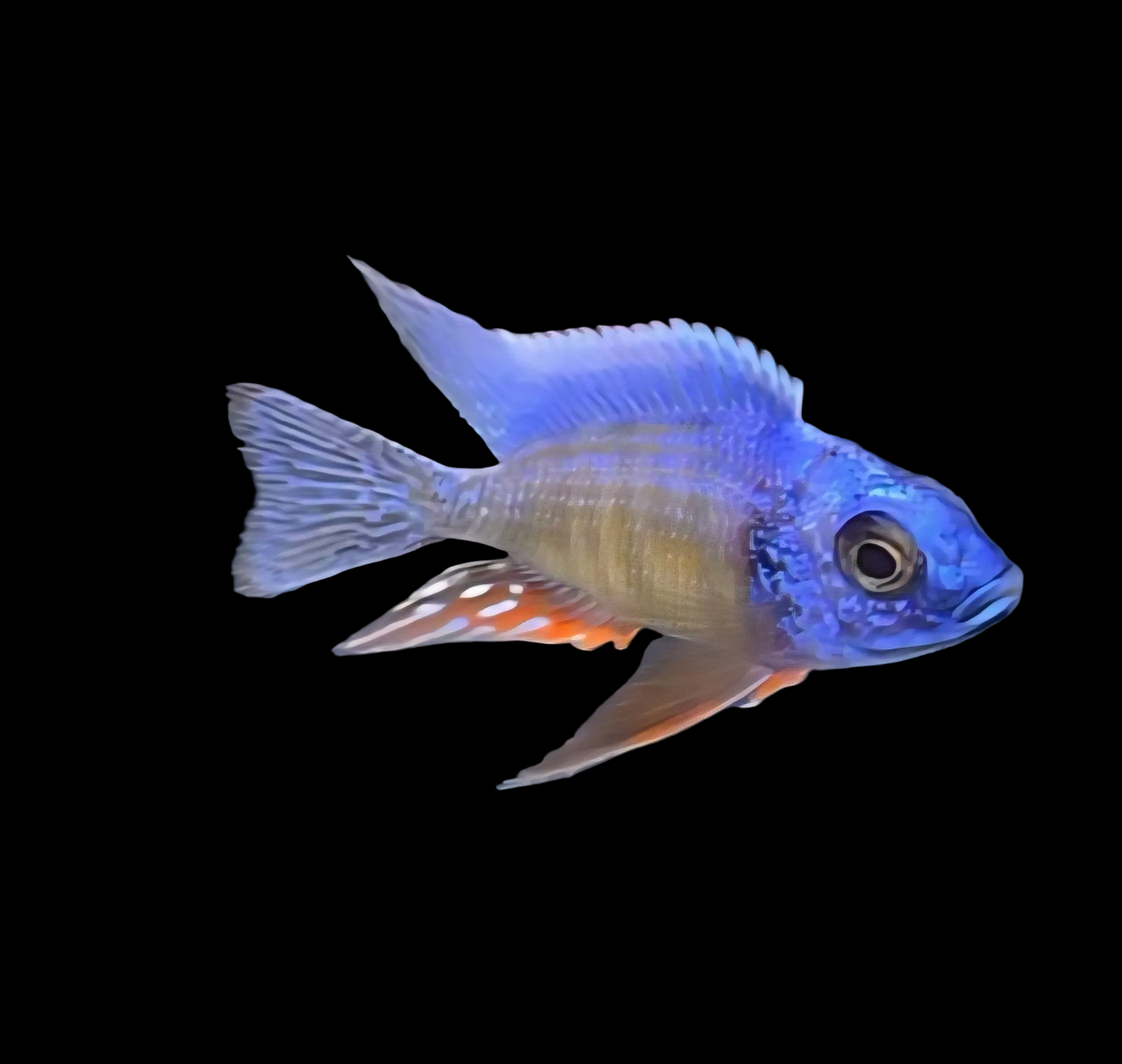
EXACT FISH IN PICTURES
4.25" Taiwan Reef
Taiwan Reef Cichlid (Protomelas sp. 'Steveni Taiwan') is an active, moderately aggressive Lake Malawi haplochromine requiring a minimum 55-75 gallon tank, hard/alkaline water (pH 7.5–8.6, 76–82°F), and a rocky setup with open swimming space. These omnivores thrive on high-quality pellets, spirulina, and frozen foods.
Tank Setup & Environment
Tank Size: 55 gallons is the minimum, but 75+ gallons is preferred for a group to accommodate their active swimming behavior and size.
Environment: Use sandy substrate with plenty of rockwork, caves, and crevices to create territories and hiding spots.
Water Parameters: Maintain pH 7.5–8.6, temperature 76°F–82°F, and high water hardness (10–20 dGH).
Filtration: Strong filtration is necessary because they are sensitive to poor water quality and high nitrates.
Diet & Feeding
Diet: Omnivorous, requiring a balance of protein and greens. Offer high-quality cichlid pellets or flakes.
Supplements: Feed frozen/live foods such as brine shrimp, Daphnia, or bloodworms, along with spirulina or blanched vegetables.
Frequency: Feed once or twice daily, only what they can consume in a few minutes.
Temperament & Compatibility
Temperament: Generally peaceful with similar-sized "Hap" cichlids but can be territorial.
Tank Mates: Ideal mates include other African cichlids from Lake Malawi, such as Peacocks (Aulonocara) Placidochromis electra, and other Protomelas species.
Social Structure: Best kept in groups with one male to several females to reduce aggression.
Health & Maintenance
Water Changes: Perform weekly water changes of 20-30% to maintain cleanliness.
Disease Prevention: Prone to Malawi bloat if overfed or fed improper diet; high fiber and clean water are key to prevention.
Breeding
Behavior: Mouthbrooder. Females will carry eggs in their mouth for 3–4 weeks.
Process: Breeding usually starts when they reach about 7 cm (around 3 inches).
Share